

Psychological Crime Fiction vs Police Procedurals: What’s the Difference?
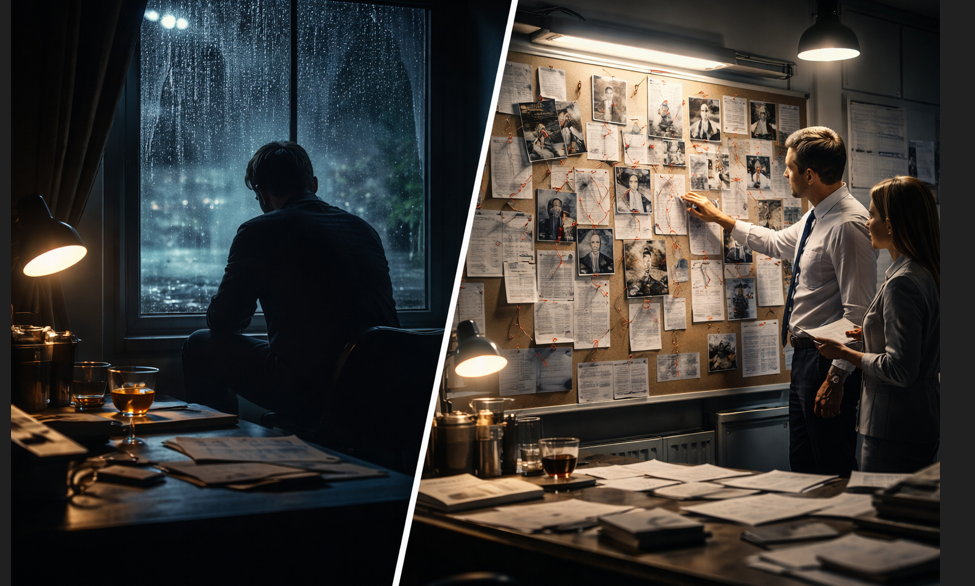
If you are an individual who is interested in mystery books, chances are that you have walked down the aisle in a bookstore that is labeled "Crime" and wondered why some books make you feel as though you are in the middle of a high-speed chase while others make you feel as though you are in the middle of a bad therapy session. While both books are obviously within the same genre, the experience that the reader is able to have is quite different. The difference between these two types of books is important not only for the writer but also for the reader who is looking to get the type of tension that they want from the novel that they are reading.
The Focus of the Investigation
The first difference that is going to be seen is the "who" and the "how" of the story. When it comes to the police procedural, the focus is always on the system. The books that are classified as police procedurals are the ones that focus on the lives of police officers, detectives, and forensic experts as they go about their job to catch the bad guy. The reader is going to see the inner workings of the police station, the way that the police department is structured, and the way that they go about gathering evidence. It is all about the grit of the job.
When it comes to the psychological crime fiction novel, the reader is not going to see any DNA swabs or any warrants that have been issued. Instead, they are going to see the "why." The focus is going to be on the mind of the character. The investigation is going to be internal as the author delves deep into the mind of the victim, the killer, or the narrator. It is not just about the person who committed the crime; it is about what is wrong with that person that caused them to commit the crime.
Methodology vs. Mind Games
The plot of a police procedural follows logic. The characters behave in accordance with a set of rules, which they sometimes bend to get the job done. You will find scenes of interrogation, the study of CCTV footage, and the pressure of time running out. Ian Rankin or Peter James are good authors to look at if you want to write a good police procedural. They show that solving a crime is not necessarily a matter of genius but of methodically going through the motions.
Psychological thrillers, on the other hand, are about the subconscious. The thriller plot does not revolve around the lack of evidence but the lack of trust. In many of these books, you will find the "unreliable narrator" trope. That is, the person narrating the story might be lying to the reader or even to themselves. The plot is not about a detective looking through a magnifying glass but about the character’s life falling apart.

The Setting and Atmosphere
The atmosphere of a police procedural novel is often realistic. For example, in Ian Rankin’s Edinburgh series, the rain-soaked streets of Edinburgh are as much a part of the atmosphere as the characters. There is a sense of order trying to combat disorder. The stakes are often high, as the detective tries to protect the public from the criminal.
Psychological crime fiction is much more intimate. "Crime" could be committed in the home, in the marriage, in the friendship. It could be anywhere. It is all about the setting, which is like the mind of the character. It is not about the safety of the city; it is about the safety of one's own mind. It is incredibly personal, which is why psychological crime fiction can linger in your mind long after you finish the books.
Which One Should You Choose
If you like a good logical puzzle and enjoy seeing the "good guys" use their knowledge to make things right, the police procedural is the way to go. It provides a good feeling of justice and a fascinating peek at how the real world copes with crime.
If, on the other hand, you like a dark, twisty road into the depths of the human mind, where no one is quite what they appear to be, then psychological crime fiction is probably more to your taste. It may not always provide a happy ending, but it always provides a fascinating exploration of the complexities of the human soul.